United States–Africa: Washington Prepares a Strategic Summit on Critical Minerals
A Diplomatic Push to Secure Strategic Supply Chains
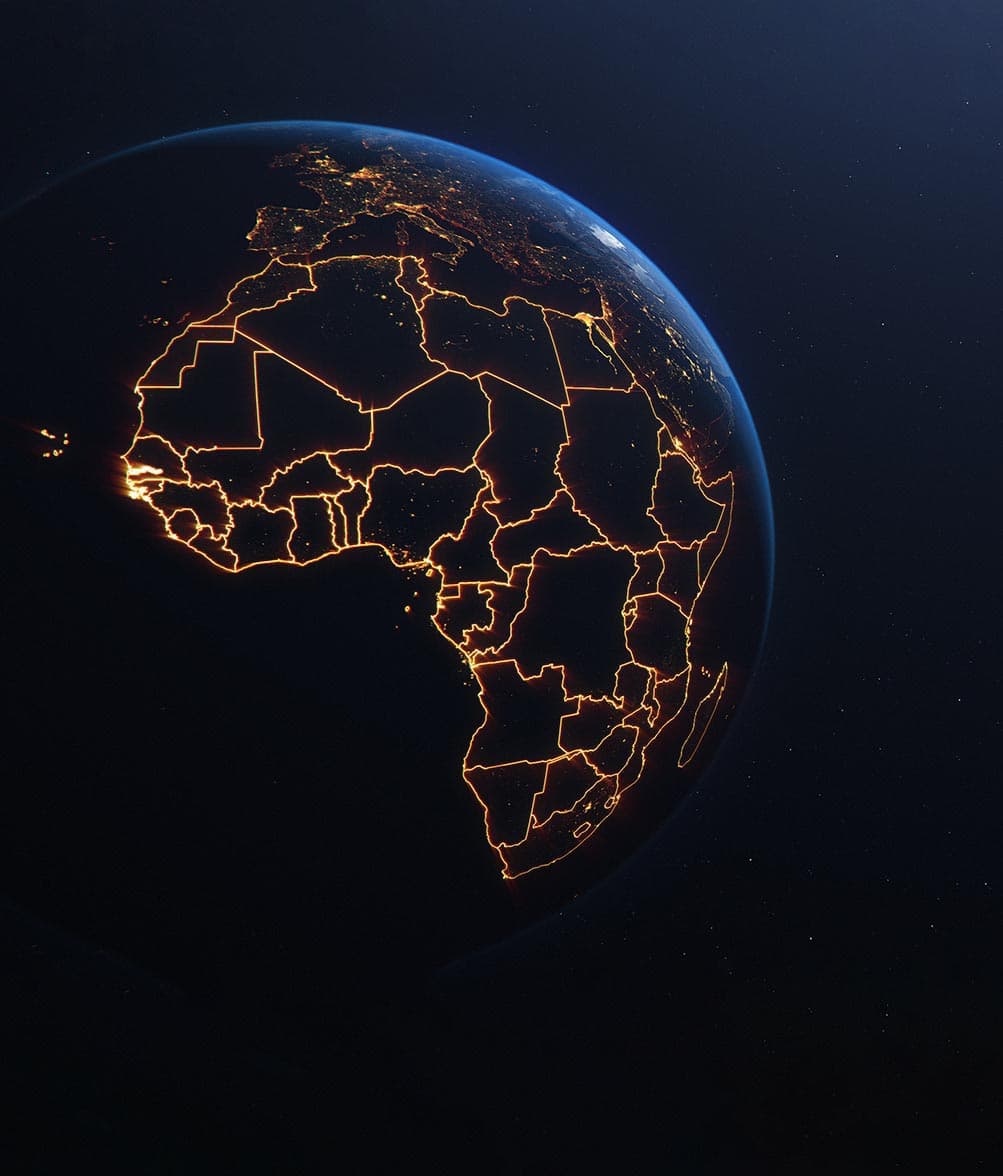
On 4 February, the United States will convene a ministerial-level summit on critical minerals with several African countries, including the Democratic Republic of Congo (DRC), Kenya, and Guinea. The meeting reflects Washington’s growing determination to secure access to resources that have become indispensable to modern economies, advanced manufacturing, and high-technology industries.
This diplomatic sequence illustrates a broader recalibration of U.S. engagement with Africa, increasingly shaped by resource security, industrial policy, and geostrategic competition, particularly with China.
Critical Minerals at the Core of U.S. Strategic Planning
Following recent diplomatic initiatives in the Middle East, Washington is now moving more decisively on the issue of critical minerals, a domain where global power balances are rapidly shifting. The Trump administration has made clear that restoring U.S. centrality in strategic supply chains is a priority, not only for economic competitiveness but also for national security and technological sovereignty.
Critical minerals—such as cobalt, lithium, rare earth elements, bauxite, and graphite—are essential for:
- semiconductors and advanced electronics,
- electric vehicles and battery storage,
- renewable energy infrastructure,
- aerospace and defence systems.
Africa, home to some of the world’s largest reserves of these resources, occupies a pivotal position in this strategic equation.
Washington’s Messaging: Security, Technology, and Energy Resilience
The U.S. Department of State announced the upcoming meeting via its official communication channels, indicating that Secretary of State Marco Rubio will host “partners from around the world” for discussions focused on critical minerals.
According to the statement, strengthening critical mineral supply chains with international partners is essential for U.S. economic and national security, technological leadership, and a resilient energy future. This framing underscores the extent to which minerals policy has become intertwined with defence planning, industrial competitiveness, and energy transition strategies.
The inclusion of African producers confirms that Washington views the continent not merely as a source of raw materials, but as a strategic arena in the restructuring of global supply networks.
Africa’s Central Role—and Strategic Leverage
The participation of countries such as the DRC, Guinea, and Kenya is particularly significant. The DRC remains the world’s leading producer of cobalt, Guinea holds vast bauxite reserves critical for aluminium production, and Kenya is positioning itself within regional value chains linked to energy transition minerals.
This summit follows similar signals issued earlier in January at the G7 meeting on supply-chain resilience, as well as recent high-level U.S. diplomatic engagements in West and Central Africa. Together, these moves suggest a sustained effort to counterbalance China’s dominant position in mineral processing, refining, and downstream integration.
Unresolved Questions and Structural Risks
While the initiative is viewed by some as an opportunity for deeper cooperation, it also raises critical concerns among policymakers, analysts, and civil society actors:
- Environmental impact: Intensified extraction risks accelerating ecological degradation if governance frameworks remain weak.
- Local economic benefits: Past experiences show that mineral wealth does not automatically translate into industrialization or broad-based development.
- Employment and security: Mining expansion can exacerbate social tensions, labor exploitation, and insecurity if not carefully managed.
- Governance and accountability: Without enforceable standards, partnerships risk reinforcing extractive models rather than transforming them.
These issues remain central to the credibility and sustainability of any expanded minerals partnership.
Strategic Outlook
The February 4 summit marks a new phase in U.S.–Africa relations, where critical minerals serve as both an economic opportunity and a geopolitical fault line. For Washington, the objective is clear: diversify supply chains, reduce exposure to Chinese-controlled processing networks, and anchor U.S. technological leadership in secure resource access.
For African states, the challenge will be to convert strategic interest into structural advantage—leveraging U.S. demand to advance local processing, value addition, industrial capacity, and long-term development rather than repeating cycles of dependency.
The outcome of this engagement will depend less on declarations than on binding frameworks, enforcement mechanisms, and the political will to align mineral extraction with national development priorities.


Discover More
Ethiopia at the Brink: The Return of War in Tigray and the Eritrean Dimension
Ethiopia is in the early stages of what may become its most dangerous security crisis since the 2020–2022 Tigray war. In late September, the TPLF announced a "defensive war" alongside six other armed groups under the banner of the Alliance for Survival coalition, seeking the removal of Prime Minister Abiy Ahmed.
Renewed Jihadist Rivalry Threatens to Reshape the Eastern Sahel
Renewed fighting between JNIM and ISSP around Tessit in eastern Mali and Oudalan province in northern Burkina Faso signals a potentially significant escalation in the struggle for control of the tri-border region.
REQUEST FOR INTEREST
How can we help you de-risk Africa?
Please enter your contact information and your requirements and needs for us to come back to you with a relevant proposal.