Pay to Access | Russian Africa Corps Reinforcements amid JNIM Pressure on Bamako
Mali’s capital faces mounting pressures as Russian Africa Corps reinforcements continue to bolster the junta amid an ongoing “economic siege” by Jama’at Nasr al-Islam wal Muslimin (JNIM). Since Wagner’s exit in June 2025, Moscow has shifted toward overt state-to-state support, delivering trainers, advisors, and equipment, while JNIM disrupts fuel and overland supply routes, straining governance and urban resilience.
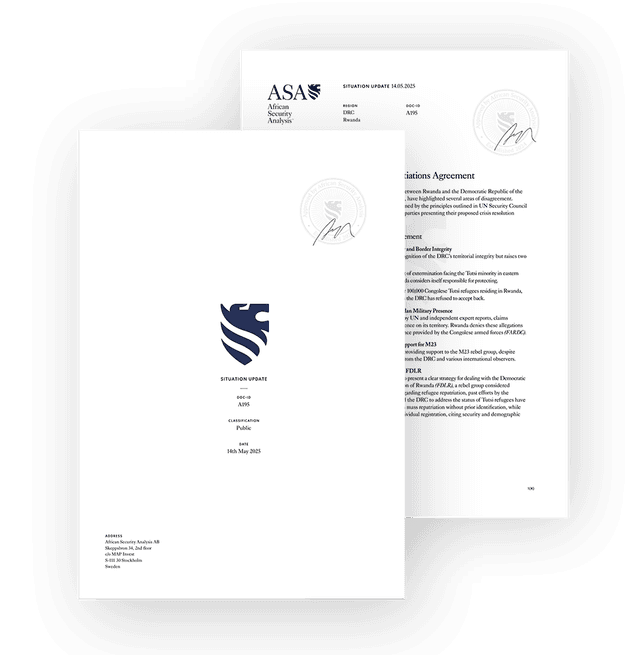
This report provides:
- Detailed operational overview of Russia’s Africa Corps deployment, including aviation, armor, and advisory support.
- Analysis of JNIM tactics, focusing on interdiction of critical supply lines and the economic pressure applied to Bamako.
- Implications for civilian life and urban stability, highlighting disruptions in fuel, services, and local mobility.
- Indicators to monitor over the next 30–90 days, including air-bridge tempo, convoy security, IED activity, and resilience proxies such as school and clinic operations.
- ASA strategic assessment, examining the limitations of Russian support, risks of JNIM infiltration, and the broader impact on governance and state capacity.
This in-depth analysis is essential for stakeholders tracking security, governance, and operational trends in Mali under ongoing insurgent pressure.

This purchase will be made in cooperation with PayPal. Use PayPal account or credit card unlock.


Discover More
Bab al-Mandab: Houthi Advance Creates a New Strategic Threat to Africa and Red Sea Trade
The capture by Yemen's Houthi movement of the remaining government-held areas along Yemen's Red Sea coastline, including Mocha, Dhubab and the strategically important island of Mayyun/Perim, represents a significant change in the security environment surrounding the Bab al-Mandab Strait.
Sovereignty Against Spillover: The AU Summit's Good-Neighbourliness Bid and the DRC–Rwanda Test of a Contradictory Doctrine
The month's only summit-level session convenes on 23 September in New York, on the margins of the 81st UN General Assembly, under the theme 'Good Neighbourliness and Regional Responses to Security and Terrorism Challenges in Africa.'
REQUEST FOR INTEREST
How can we help you de-risk Africa?
Please enter your contact information and your requirements and needs for us to come back to you with a relevant proposal.